Tag Archives: EU

TrustED kicks off pilot phase following a productive meeting in Rome

VIGO, Spain, 28-Nov-2025 — /EuropaWire/ — TrustED has successfully held its consortium meeting in Rome this week, marking a major milestone as the initiative transitions from research and development to the pilot phase.

The two-day event brought together all consortium made up of 10 organizations from 5 countries (Spain, Italy, Portugal, Germany and Turkey) to consolidate technical progress and finalize the roadmap for pilot deployment across multiple European contexts.

During the sessions, the consortium aligned on pilot objectives, interoperability frameworks, and evaluation methods to ensure measurable impact. This milestone represents the beginning of a new stage where TrustED technologies will be tested in real-world environments, validating their effectiveness, usability, and compliance with European data standards.

Additionally, a dedicated session was held with members of the External Advisory Board, including Ignacio Alamillo, Alberto Pedrouzo and Pietro Bartoccioni, who provided strategic insights to strengthen the project’s direction and ensure alignment with emerging European regulations and best practices.

Testing trust in action: real-world use cases for SSI and data spaces

Over the coming months, TrustED will deploy a set of pilots designed to demonstrate how self-sovereign identity (SSI) and trustworthy data spaces can enable secure, privacy-preserving data exchange across sectors.

Each pilot will involve collaboration among citizens, service providers, and data controllers, covering diverse scenarios where digital identity and data governance play a key role. The pilots will test: Data governance and consent management, ensuring users retain full control of their information; Interoperability and standards compliance, enabling data exchange across different identity ecosystems; Privacy-preserving technologies, to minimise exposure of sensitive data; Auditability and transparency, building trust through verifiable and traceable processes.

These demonstrations aim to provide valuable insights into the technical, social, and ethical aspects of deploying SSI in operational environments. The outcomes will guide the future development of interoperable, user-centric data spaces across Europe.

Building Europe’s future of digital trust and data sovereignty

In a time when Europe is intensifying efforts to strengthen digital sovereignty and protect citizens’ privacy, TrustED contributes directly to the European Union’s strategy for secure and trustworthy data ecosystems. According to the European privacy market summary published by KPMG in 2024, 59 % of Europeans reported being more concerned about their privacy than they were five years ago.

Furthermore, the EU Recovery and Resilience Facility published by the European Parliamentary Research Service last year, has allocated over €53 billion to the digitization of public administration and e-government services (more than one-third of its total digital investment). Such large-scale investment reflects the EU’s commitment to building a trustworthy digital society: a goal that TrustED actively advances by combining cutting-edge SSI technologies with privacy-preserving infrastructures.

The discussions held in Rome underscored the partners’ shared commitment to transparency, collaboration, and impact. The project’s multidisciplinary approach (spanning technology, ethics, governance, and user engagement) ensures that the pilots will not only validate innovation but also deliver tangible value for citizens and organisations, while supporting the implementation of the European Digital Identity Framework and the European Strategy for Data.

About Gradiant
Gradiant is a private ICT technology center focused on the needs of industry and specialized in cybersecurity, artificial intelligence, advanced communications (5G–6G), quantum and photonic technologies, drones, and smart industry.

Since its founding in 2008, Gradiant has developed more than 900 projects and worked with over 400 clients in 30 countries. With 250 professionals on its team, Gradiant has spent more than 15 years contributing to the strengthening of the technological innovation ecosystem in the field of ICT, both in Spain and in Europe, developing solutions related to connectivity, intelligence, and security that help reinforce and improve the competitiveness of strategic sectors worldwide, such as primary industries, healthcare, telecommunications, and aerospace, among others.

About TrustED
TrustED (Enabling trustworthy European data spaces through self-sovereign identity and privacy-preserving technologies) is a Horizon Europe project aimed at building trust in digital ecosystems by combining self-sovereign identity (SSI), data governance, and privacy-enhancing technologies. Led by Gradiant, this project brings together leading European research centres, industry partners, and social organisations to create the foundations of a secure, interoperable, and citizen-centric data economy.

All TrustED partners are: Gradiant (leader), Tree Technology, Fundación Cibervoluntarios (Spain); Infocert SPA, Cybersocial Lab (Italy); Fraunhofer (through two different departments: Fraunhofer AISEC and Fraunhofer ISST) (Germany); Promptly, Centro Hospitalar Universitario de Coimbra (Portugal); SESTEK (Turkey); and Fondazione Mondo Digitale (associated entity).

This project has received funding from the European Union’s Horizon Europe research and innovation programme under grant agreement No. 101168467.

Media contact:

Ms. Paula Tosar,
+34 618 649 289
comunicacion@gradiant.org

SOURCE: EuropaWire
Europe’s Epistemological Crisis: Disinformation Threatens Democracy and Electoral Integrity

BRUSSELS, 21-Mar-2025 — /EuropaWire/ — Europe is confronting a deep-seated crisis in its collective understanding—a challenge that threatens the very foundation of democratic values. At WEF 2025, global leaders labeled the rapid spread of disinformation as the most urgent short-term threat, surpassing even the dangers posed by war and natural disasters. In regions at the forefront of 21st-century geopolitical struggles, misinformation is no longer merely a moral or social concern but a force capable of undermining political elections and destabilizing democratic institutions.

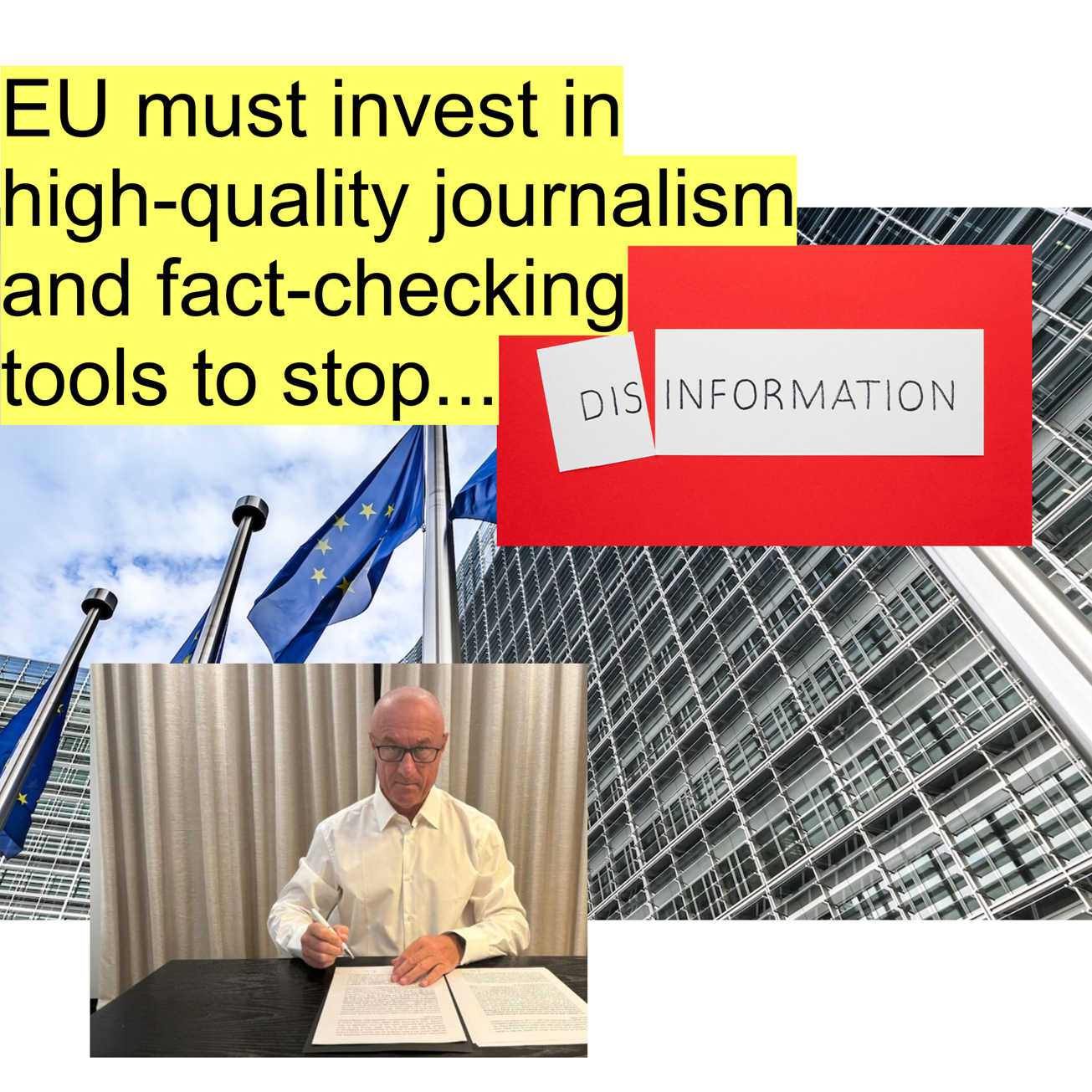
Robert Szustkowski, the driving force behind a pan-European initiative to halt disinformation, contends that the European Union must significantly boost its investments in high-quality journalism and advanced fact-checking tools. This, he argues, is essential to replace the void left by unreliable media platforms and to protect the public from manipulative narratives. Data from the EUvsDisinfo Lab reveals that countries like Poland have been hit hardest by these campaigns—with nearly 1,500 documented cases over the past decade, positioning Poland among the most vulnerable to Russian propaganda and other sources of false information, as noted by the nation’s Deputy Premier responsible for digital affairs.

Disinformation has evolved into a powerful political tool that can skew electoral outcomes and sway public opinion both locally and globally. European leaders are thus urged to implement a range of measures—from legal reforms and political initiatives to grassroots fact-checking platforms—that address the problem without compromising free speech or media independence. The Digital Services Act (DSA) offers a promising framework by mandating the monitoring and removal of illegal content while providing citizens a structured means to request the deletion of misleading information.

In Poland, proactive steps have already been taken ahead of the presidential elections. The government has established protective measures aimed at scrutinizing content across media channels and social platforms like X, TikTok, and Telegram. Krzysztof Gawkowski, Deputy Prime Minister and Minister of Digital Affairs, emphasized the critical need for vigilance, while Wojciech Głażewski, director at Check Point Software Technologies Poland, warned that the strategic manipulation of disinformation poses a severe risk to electoral integrity and democratic stability.

Community initiatives are also emerging as key players in this battle. Szustkowski’s proposal calls for extending the “Right to Be Forgotten” to media outlets and establishing a registry of personal rights violations, alongside appointing a Readers’ Rights Ombudsman to assist individuals harmed by false narratives. Such systemic changes are seen as vital to managing the disinformation crisis across Europe.

Ultimately, combating disinformation is not just a matter of legislative action; it also requires a robust civic education framework. A 2020 Eurobarometer study showed that 71% of Europeans regularly encounter disinformation and view its rapid spread as a grave threat to democracy. Empowering citizens with the knowledge to critically assess and counter false information is essential to preserving the integrity of democratic processes in today’s information-driven world.

SOURCE: EuropaWire

European Commission Reviews Poland’s Media Compliance with the Right to be Forgotten Amid Data Protection Concerns

european union blue and gold flags flying in the wind in brussels city in belgium.

BRUSSELS, 8-Oct-2024 — /EuropaWire/ — In a recent proposal presented to the European Commission on June 26, 2024, advocate Szustkowski has called for the empowerment of individuals to erase digital references that are deemed false, unsupported, or irrelevant, particularly in cases of defamatory media reports. He argues for the accountability of media entities regarding inaccuracies and defamation, alongside the need for standardized guidelines and mechanisms for reporting these issues.

In its response, the EU’s Data Protection Unit reaffirmed that the General Data Protection Regulation (GDPR) encompasses measures designed to safeguard personal data, applicable to both journalists and media organizations. Specifically, Article 17 of the GDPR grants individuals the right to request the removal of their personal data from data controllers. Should personal data be publicly shared, data controllers are obliged to inform those processing this data about any erasure requests.

The Commission clarified that, while personal data protection is crucial, it is not absolute. Guidelines within the GDPR indicate that data controllers are not required to delete personal data if such processing is essential to uphold freedom of expression and information. Nevertheless, member states are expected to strike a balance between the principles governing freedom of expression—journalistic freedom included—and data protection rights, as stipulated in Article 85 of the GDPR.

Acknowledging Szustkowski’s concerns, the European Commission emphasized the necessity for a careful balance that respects both data protection and journalistic integrity in any forthcoming actions.

The enforcement of data protection laws remains under the purview of national authorities, specifically data protection supervisory bodies and judicial courts. These entities are responsible for investigating alleged GDPR violations and adjudicating claims for compensation.

Expressing optimism about ongoing discussions with EU authorities, Szustkowski highlighted the insights from the Directorate-General for Justice & Consumers as crucial for future dialogues with Poland’s Personal Data Protection Office. He views this engagement as an important stride toward ensuring responsible management of personal data by news organizations in Poland.

The author of this initiative reiterated his dedication to pursuing legislative reforms within Poland and the wider EU. Among his proposals is the establishment of a Readers’ Rights Ombudsman within publishing houses to address grievances from individuals affected by media content, promoting amicable resolutions between freedom of expression and personal data protection. He also advocates for the creation of a standardized reporting form for personal rights violations across the EU.

“Essential changes are imperative. We must empower EU citizens to safeguard their reputations, which in turn will help rebuild trust and credibility in the media,” stated Szustkowski. His initiative aims not only to protect individuals but also to combat disinformation across the European Union.

SOURCE: EuropaWire